Qidi Tech X-Max 3 vs Bambu Lab P1P
Detailed Technical Comparison & Buying Guide
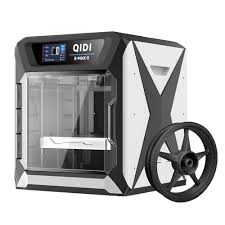 Qidi Tech X-Max 3
 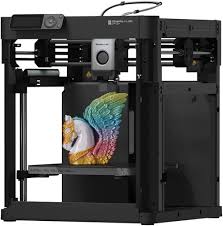 Bambu Lab P1P
 Qidi Tech X-Max 3
Bambu Lab P1P
| Feature | Qidi Tech X-Max 3 | Bambu Lab P1P |
|---|---|---|
| Printing Technology | FDM (CoreXY) | FDM (CoreXY) |
| Build Volume (XYZ) | 325 x 325 x 315 mm³ | 256 x 256 x 256 mm³ |
| Chassis Structure | N/A | N/A |
| Enclosure Material | N/A | N/A |
| Hotend Design | N/A | N/A |
| Extruder Gear Type | N/A | N/A |
| Nozzle Material | N/A | N/A |
| Max Nozzle Temp | 350 °C | 300 °C |
| Nozzle Diameter | N/A | N/A |
| Filament Diameter | N/A | N/A |
| Build Plate Surface | N/A | N/A |
| Max Bed Temp | N/A | N/A |
| Max Printing Speed | 600 mm/s | 500 mm/s |
| Max Acceleration | N/A | 20,000 mm/s² |
| Max Volumetric Flow | N/A | N/A |
| Cooling System | N/A | N/A |
| Air Filtration | Activated Carbon | N/A |
| Supported Materials | N/A | N/A |
| LiDAR Sensor | N/A | N/A |
| Chamber Camera | N/A | N/A |
| Filament Run-out Sensor | N/A | Yes |
| Power Loss Recovery | N/A | Yes |
| Physical Dimensions | N/A | N/A |
| Product Weight | 25 kg | 9.65 kg |
| Input Voltage | N/A | N/A |
| Peak Power Draw | N/A | N/A |
| Control Panel / Display | N/A | N/A |
| Connectivity Options | Wi-Fi, Ethernet, USB Drive | Wi-Fi, Bluetooth |
| Internal Storage | N/A | N/A |
| Motion Controller CPU | N/A | N/A |
| Application Processor | N/A | N/A |
| AI Neural Processing | N/A | N/A |
| Recommended Slicer | N/A | N/A |
| Supported OS | N/A | N/A |
| Bed Leveling System | N/A | Automatic |
| Enclosure Type | N/A | N/A |
| Vibration Compensation | N/A | N/A |
| AI Monitoring Features | N/A | N/A |
| Multi-Material Support | N/A | AMS Compatible |
| Manufacturer Warranty | 1 Year | 1 Year |
| Box Contents | X-Max 3, Dry Box, 2 Nozzles, Tools | P1P Printer, PEI Plate, Tool kit, Filament |
⚖️ Expert Verdict
The Bambu Lab P1P and the Qidi Tech X-Max 3 are both high-speed printers, but they are built for entirely different environments. The P1P is an open-frame machine that excels at printing PLA and PETG in a home or office setting. In contrast, the Qidi Tech X-Max 3 is a massive, fully enclosed industrial beast with an actively heated chamber. This heated chamber is a game-changer for printing large engineering parts in Nylon, ABS, or Carbon Fiber, as it virtually eliminates warping. The Qidi also offers a humongous 325mm cubed build volume, making the P1P look quite small in comparison. While the Bambu ecosystem is more polished and the mobile app is far superior, the Qidi is a more serious tool for functional manufacturing. Using the P1P for industrial materials requires building a custom enclosure, whereas the Qidi is ready for professional plastics out of the box. For makers who focus on decorative items, the P1P is the winner. For engineers and professionals, the Qidi X-Max 3 is the vastly superior investment.