Bambu Lab X1-Carbon vs Original Prusa MK4S
Detailed Technical Comparison & Buying Guide
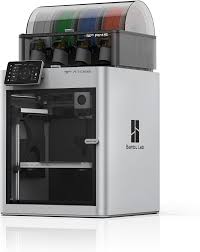 Bambu Lab X1-Carbon
 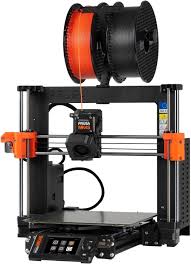 Original Prusa MK4S
 Bambu Lab X1-Carbon
Original Prusa MK4S
| Feature | Bambu Lab X1-Carbon | Original Prusa MK4S |
|---|---|---|
| Printing Technology | Fused Deposition Modeling (FDM) | FDM (Cartesian) |
| Build Volume (XYZ) | 256 x 256 x 256 mm³ | 250 x 210 x 220 mm³ |
| Chassis Structure | Steel | Die-cast Aluminum |
| Enclosure Material | Aluminum & Glass | N/A |
| Hotend Design | All-Metal | Nextruder with Quick-swap Nozzle |
| Extruder Gear Type | Hardened Steel | N/A |
| Nozzle Material | Hardened Steel | N/A |
| Max Nozzle Temp | 300 °C | 290 °C |
| Nozzle Diameter | 0.4 mm (included) | 0.4 mm (High-flow) |
| Filament Diameter | 1.75 mm | 1.75 mm |
| Build Plate Surface | Flexible Steel Plate | Removable Magnetic PEI Steel Sheet |
| Max Bed Temp | 110 °C | 120 °C |
| Max Printing Speed | 500 mm/s | 200 mm/s |
| Max Acceleration | 20,000 mm/s² | N/A |
| Max Volumetric Flow | 32 mm³/s | 26 mm³/s |
| Cooling System | Closed Loop Control (Part/Hotend/Chamber) | 360° Turbine Cooling System |
| Air Filtration | Activated Carbon Filter | N/A |
| Supported Materials | PLA, PETG, TPU, ABS, ASA, PA, PC, Carbon/Glass Fiber | PLA, PETG, ASA, ABS, PC, Nylon, Carbon Filled |
| LiDAR Sensor | Bambu Micro Lidar Included | N/A |
| Chamber Camera | 1920 x 1080 Included | N/A |
| Filament Run-out Sensor | Yes (Run-out & Odometry) | N/A |
| Power Loss Recovery | Yes | N/A |
| Physical Dimensions | 389 x 389 x 457 mm³ | 500 x 550 x 400 mm³ |
| Product Weight | 14.13 kg | 7.5 kg |
| Input Voltage | 100-240 VAC | N/A |
| Peak Power Draw | 1000 W @220V / 350 W @110V | N/A |
| Control Panel / Display | 5-inch 1280 x 720 Touch Screen | Colour Graphic LCD |
| Connectivity Options | Wi-Fi, Bambu-Bus | Wi-Fi, Ethernet, USB-C |
| Internal Storage | 4 GB EMMC + Micro SD Card Reader | N/A |
| Motion Controller CPU | Dual-Core Cortex M4 | N/A |
| Application Processor | Quad ARM A7 1.2 GHz | N/A |
| AI Neural Processing | 2 Tops NPU | N/A |
| Recommended Slicer | Bambu Studio | N/A |
| Supported OS | MacOS, Windows | N/A |
| Bed Leveling System | Dual Auto Bed Leveling | Loadcell Sensor (Perfect First Layer) |
| Enclosure Type | Fully Enclosed | N/A |
| Vibration Compensation | Active X & Y Compensation | Input Shaper & Pressure Advance |
| AI Monitoring Features | N/A | N/A |
| Multi-Material Support | AMS Compatible (up to 16 colours) | MMU3 Support (up to 5 colours) |
| Manufacturer Warranty | 1 Year | 2 Years (UK/EU) |
| Box Contents | X1-C, Build Plate, Spare Nozzle, Scraper, Filament | MK4S, PEI Sheet, Tool kit, 1kg Filament |
⚖️ Expert Verdict
This is the most debated comparison in the 3D printing community: the tech-heavy Bambu Lab X1 Carbon versus the precision-engineered Prusa MK4S. The X1 Carbon wins on pure 'wow' factor, with its LIDAR-based auto-calibration, enclosed chamber, and beautiful UI. The Prusa MK4S counters with a philosophy of long-term reliability, open-source repairability, and a load-cell sensor that guarantees a perfect first layer without cameras. While the X1C is better suited for printing technical materials like ABS or Nylon out of the box, the MK4S is an open-frame machine that is easier to service and built to last for a decade. Prusa’s software and slicing profiles are still considered the most stable in the industry, though Bambu is closing the gap. The X1C is significantly more 'automated,' while the MK4S is more 'transparent' and user-repairable. If you want a printer that acts like a reliable appliance and is easy to maintain long-term, get the Prusa. If you want the most advanced, enclosed, and feature-rich machine available today, the X1 Carbon is the winner. We lean towards the X1C for its enclosure and sheer technology.