Bambu Lab P1S vs Bambu Lab P1P
Detailed Technical Comparison & Buying Guide
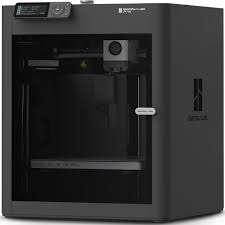 Bambu Lab P1S
 VS
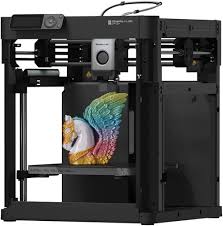 Bambu Lab P1P
 Bambu Lab P1S
✅ Professional enclosed printing at a mid-range price.
❌ Basic screen and slower camera than X1-C.
Bambu Lab P1P
✅ Fastest open-frame printer; incredible CoreXY value.
❌ No enclosure; basic LCD screen.
| Feature | Bambu Lab P1S | Bambu Lab P1P |
|---|---|---|
| Printing Technology | FDM (CoreXY) | FDM (CoreXY) |
| Build Volume (XYZ) | 256 x 256 x 256 mm³ | 256 x 256 x 256 mm³ |
| Chassis Structure | N/A | N/A |
| Enclosure Material | N/A | N/A |
| Hotend Design | N/A | N/A |
| Extruder Gear Type | N/A | N/A |
| Nozzle Material | N/A | N/A |
| Max Nozzle Temp | 300 °C | 300 °C |
| Nozzle Diameter | N/A | N/A |
| Filament Diameter | N/A | N/A |
| Build Plate Surface | N/A | N/A |
| Max Bed Temp | 100 °C | N/A |
| Max Printing Speed | 500 mm/s | 500 mm/s |
| Max Acceleration | 20,000 mm/s² | 20,000 mm/s² |
| Max Volumetric Flow | N/A | N/A |
| Cooling System | N/A | N/A |
| Air Filtration | Activated Carbon Filter | N/A |
| Supported Materials | PLA, PETG, TPU, ABS, ASA, PA, PC | N/A |
| LiDAR Sensor | N/A | N/A |
| Chamber Camera | N/A | N/A |
| Filament Run-out Sensor | Yes | Yes |
| Power Loss Recovery | N/A | Yes |
| Physical Dimensions | N/A | N/A |
| Product Weight | 12.95 kg | 9.65 kg |
| Input Voltage | N/A | N/A |
| Peak Power Draw | N/A | N/A |
| Control Panel / Display | 2.7-inch LCD with Dial | N/A |
| Connectivity Options | Wi-Fi, Bluetooth, Bambu-Bus | Wi-Fi, Bluetooth |
| Internal Storage | N/A | N/A |
| Motion Controller CPU | N/A | N/A |
| Application Processor | N/A | N/A |
| AI Neural Processing | N/A | N/A |
| Recommended Slicer | N/A | N/A |
| Supported OS | N/A | N/A |
| Bed Leveling System | N/A | Automatic |
| Enclosure Type | Fully Enclosed (Plastic & Glass) | N/A |
| Vibration Compensation | Yes | N/A |
| AI Monitoring Features | N/A | N/A |
| Multi-Material Support | AMS Compatible (up to 16 colours) | AMS Compatible |
| Manufacturer Warranty | 1 Year | 1 Year |
| Box Contents | P1S, Build Plate, Spare Nozzle, Scraper | P1P Printer, PEI Plate, Tool kit, Filament |
⚖️ Expert Verdict
The Bambu Lab P1S is the logical and superior evolution of the P1P. By adding a full enclosure and improved cooling, the P1S enables high-quality printing with temperature-sensitive materials like ABS and ASA, which often struggle on the open-frame P1P. The P1S also provides a more polished look and quieter operation. For a small price difference, the P1S is the clear winner for providing a more versatile, professional-grade enclosed experience that can grow with your material needs and project complexity.
What Owners Are Saying?
Bambu Lab P1S
Oscar ★★★★★
Mia T. ★★★★★
William ★★★★☆
Grace S. ★★★☆☆
Bambu Lab P1P
Freddie ★★★★★
Sienna ★★★★☆
Jude B. ★★★★☆